

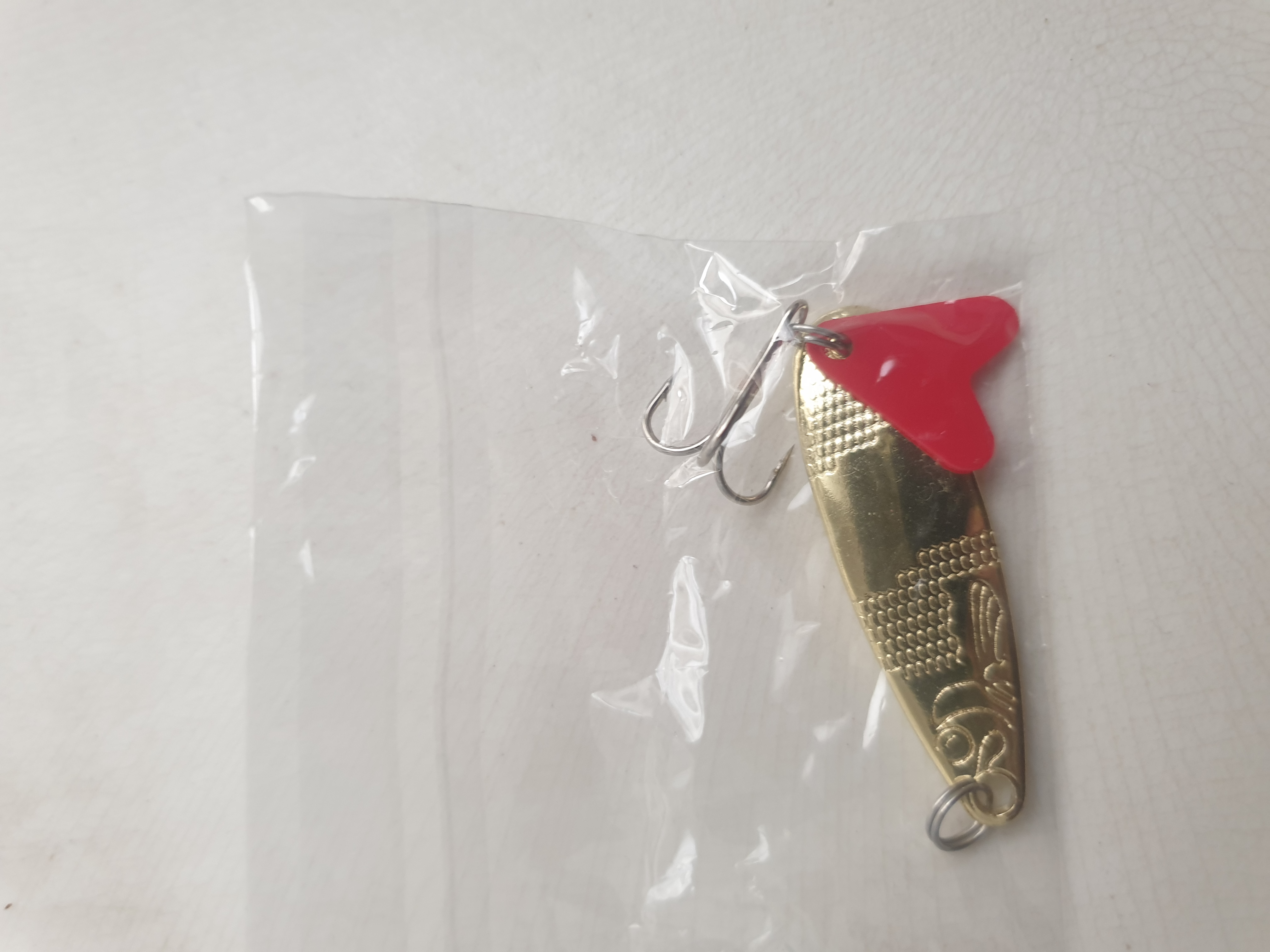
Rigging that gold spoon with the red tail – quick and practical
- First, identify parts: you’ve got the spoon body, a front attachment eye, and a rear hook/tail area. If the red piece is a separate tail/swim blade, make sure it can move freely and isn’t binding on the hook.
- Option A – stock/ready-to-go: if the lure already has a rear hook attached, simply tie your main line to the front eye using a solid knot and let the rear hook hang free behind the spoon.
- Option B – add or adjust hardware: if you want to swap the rear hook or replace a missing ring, use small pliers to open/close the split rings. Attach the treble hook to the rear ring so the points face backward when you’re retrieving.
Knot choice (tie to the front eye):
- Improved Clinch Knot (easy and reliable): thread the line through the eye, make 5–7 wraps, pass the tag end through the small loop, moisten, and tighten with even pressure. Trim the tag end.
- Alternative: a small Loop Knot to keep a bit of freedom in the lure’s action, especially if you want it to flutter a bit more on a slow retrieve.
Tips for the tail/red piece:
- Make sure the red tail can swing freely and isn’t pinched by the hook. If it’s rubbing, you may need to slightly bend the hook shank or swap to a different hook size.
- If the tail is used for added attraction, give it a light bend so it sits just behind the spoon and pulses with the retrieve.
Retrieval and depth:
- Cast toward structure (grass edges, weedlines, drop-offs) and start with a slow, steady retrieve. In late fall, fish are sluggish, so a subtle, not-too-fast cadence works best.
- Try pauses: reel a short distance, pause for 1–2 seconds, then resume. The spoon’s wobble and the tail’s movement can trigger strikes during the pause.
- Depth control: if you’re fishing deeper, allow the spoon to sink a bit before starting the retrieve; you can also use a light split-shot above the lure if you need help getting down.
Weather and season note (late fall):
- Water is cooler and fish=bite windows tighten. Keep the lure in the strike zone longer and don’t over-stir the water. A slower, methodical retrieve near structure often outperforms fast cranks right now.
Maintenance:
- Rinse with fresh water after fishing in salt or brackish water. Dry and store to prevent rust on the rings and hooks.
Quick reference videos to solidify the technique:
- How to Rig the 6in Zoom Lizard – basics of rigging lures: How to Rig the 6in Zoom Lizard
- How to Rig a Hook on a Bionic Soft Lure – hook placement and action: How to Rig a Hook on a Bionic Soft Lure
- How to rig a Donkey Rig / Tandem Rig – general rigging concepts: How to rig a Donkey Rig / Tandem Rig
Helpful fishing gear you might consider (related):
- Lindy Rigger for Walleye Fishing – keeps snells and rigs organized
- Catfish-Rig for Bank Fishing – simple rigs and rigs accessories
You’ve got this! Take your time, test it out, and adjust based on the bites you’re getting. Tight lines and go get ‘em! 🐟👍


