

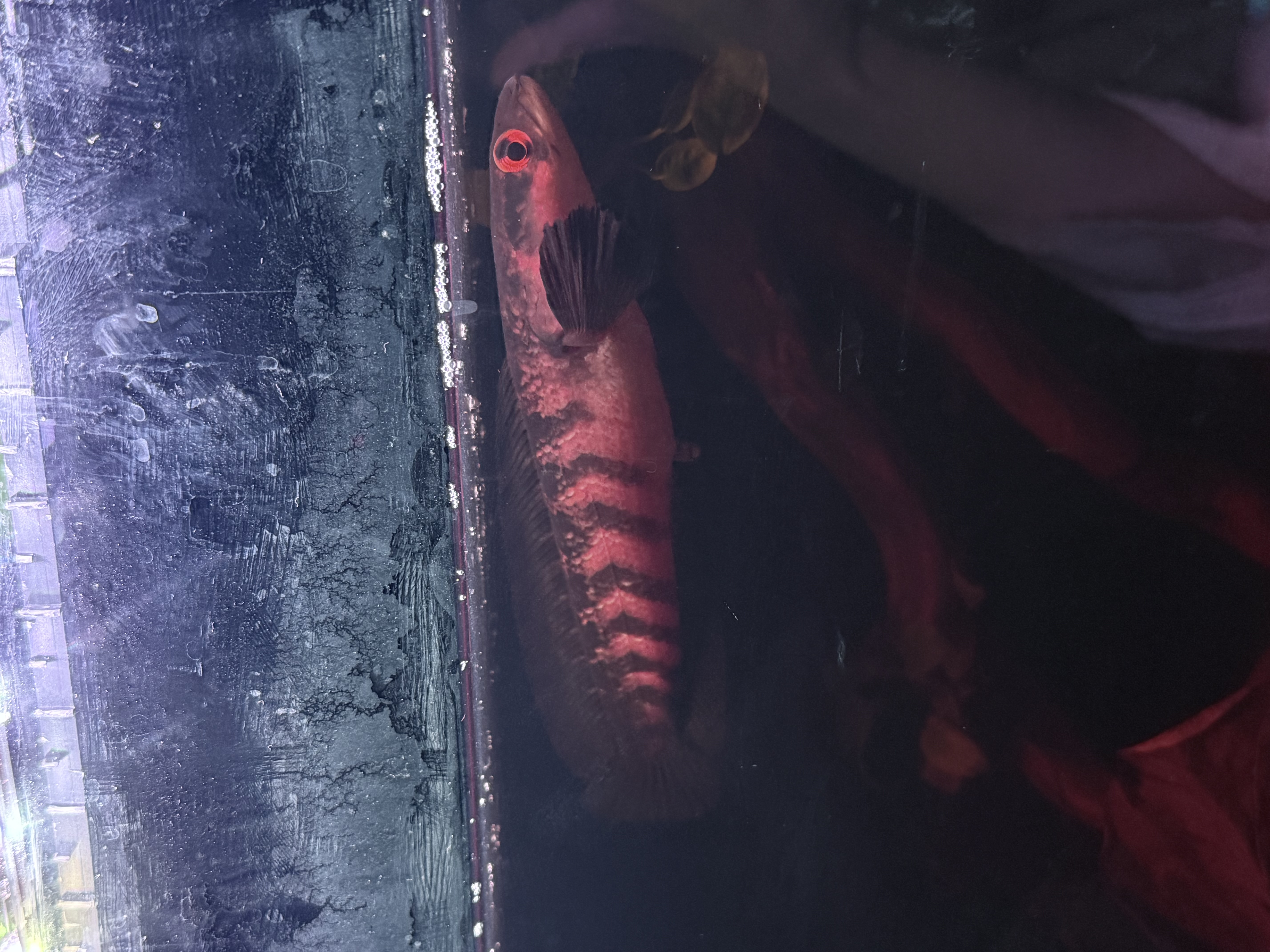
Short verdict: The fish in your photo looks healthy and quite striking, but lighting and camera color can exaggerate reds. A few things to check in person will tell you if it’s truly in good shape. 🐟
What I’m seeing from the pic:
- Bright body color with distinct dark vertical markings and a clear eye that isn’t cloudy.
- Fins appear intact with no obvious frayed edges or sores.
- No obvious signs of swelling or fungus on the body surface.
What to look for in real life (health checks):
- Active and alert – it should swim confidently and respond to approach.
- Normal appetite – readily takes pellets or meaty foods.
- Clear gills and steady breathing; no rapid gill flaring or labored breathing at rest.
- Even, non-bloated belly; no blotchy patches, white spots, or sores.
- Fins clean and non-tattered; no white edge or fuzz.
Care tips if you decide to keep it:
- Tank setup: Channa can get large and are powerful; start with a roomy tank and plan for a larger eventual size. A single juvenile can do fine in 40 gallons, but adults often need much bigger spaces. Use a sturdy lid—these fish can be jumpy and strong.
- Water conditions: Keep temperature around 24–28°C (75–82°F), pH roughly 6.5–7.5, and good filtration with steady water quality. Regular (20–30%) weekly water changes help a lot.
- Diet: Offer high-quality pellets plus meaty foods (shrimp, fish, or live/frozen options). Feed 1–2 times daily in small portions to avoid overfeeding.
- Tankmates: Be cautious—these are predatory and territorial. Best kept alone or with suitably large, robust tank mates that won’t fit in their mouth.
- Environment: Provide hiding spots and open swimming space; avoid sharp decorations that can injure fins.
Weather note (mid fall): If you’re maintaining this setup indoors, keep a stable temperature and avoid drafts. A heater set to around 26°C (79°F) helps prevent stress from autumn temperature swings.
For more on Channa care and identification, check real-world videos like:
You’ve got a cool channa there—with stable temps, good water, and proper space, it can be a fantastic centerpiece. Keep an eye on behavior, and you’ll know soon whether it’s truly thriving. 🌟


